


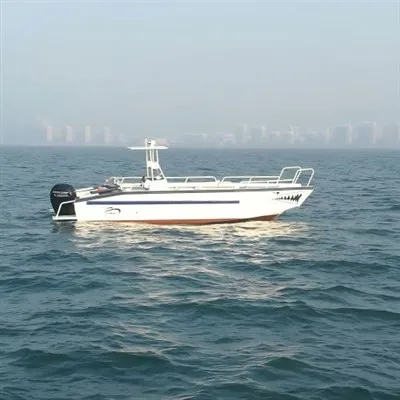


Hey there! I'm a supplier of Island Pilot Boats. One question I often get asked is, "How many crew members are needed on an Island Pilot Boat?" Well, let's dive into this topic and figure it out.


First off, the number of crew members needed on an Island Pilot Boat depends on a bunch of factors. The size of the boat is a major one. Smaller Island Pilot Boats, say those around 20 - 30 feet in length, might only need one or two crew members. These boats are usually more maneuverable and easier to handle. For instance, if you're just doing short trips around a small island, one experienced skipper could probably manage the boat on their own. They'd be in charge of steering, navigating, and making sure everything runs smoothly.
But as the boat gets bigger, things change. Larger Island Pilot Boats, like those over 50 feet, will definitely need more crew. A big boat has more systems to manage, like the engine, navigation equipment, and safety gear. You might need a skipper to handle the steering and navigation, an engineer to keep an eye on the engine and other mechanical systems, and maybe a deckhand to help with tasks like tying up the boat, handling lines, and assisting with any maintenance work.
Another factor is the type of operation. If the Island Pilot Boat is used for commercial purposes, such as transporting passengers or goods, there are usually regulations that dictate the minimum number of crew members. For example, if you're carrying a certain number of passengers, you need to have enough crew to ensure their safety in case of an emergency. This might mean having a crew member dedicated to safety procedures, like life - jacket distribution and emergency evacuation drills.
The weather and sea conditions also play a role. In rough seas or bad weather, more crew members are needed to handle the boat safely. The skipper might need an extra pair of hands to adjust the sails (if it's a sail - powered Island Pilot Boat) or to operate the winches and ropes. A deckhand can help keep the boat stable by moving around and adjusting the weight distribution.
Let's talk about some of the boats we offer. We have the Lakeland Leisure Boats. These are great for leisure trips around the islands. They're relatively small, so they usually only need one or two crew members. They're easy to handle and perfect for a day out on the water.
Our Landing Craft Work Boat is a different story. It's designed for more heavy - duty work, like transporting equipment and supplies to the islands. This boat is larger and more complex, so it typically requires a crew of three or four. You'll need a skipper, an engineer, and one or two deckhands to handle the loading and unloading of cargo.
The Scenic Land Journeys boat is used for tourist trips. Since it's carrying passengers, safety is a top priority. Depending on the number of passengers, you might need a skipper, a safety officer, and a couple of deckhands to assist the passengers.
When it comes to training the crew, it's essential. All crew members should have proper training in navigation, boat handling, safety procedures, and first - aid. This ensures that they can handle any situation that might arise on the water.
Now, if you're thinking about purchasing an Island Pilot Boat, it's important to consider the number of crew members you'll need. You don't want to end up with a boat that's too big for you to handle with the available crew. On the other hand, you also don't want to have a boat that's too small for your intended use.
We're here to help you make the right decision. Our team of experts can guide you through the process of choosing the right Island Pilot Boat for your needs and can also provide advice on the number of crew members required. Whether you're a leisure boater, a commercial operator, or a tourist company, we've got the boats and the knowledge to support you.
If you're interested in learning more about our Island Pilot Boats or have any questions about crew requirements, don't hesitate to reach out. We're always happy to have a chat and help you find the perfect boat for your situation. Let's start a conversation and see how we can work together to get you out on the water with the right boat and the right crew.
References:
- Maritime safety regulations and guidelines
- Industry best practices for boat operation and crew management